

 Sign In

Synopsis
Multi-alignment basically refers to smaller states and middle powers maintaining good and substantial relations with multiple great and major powers simultaneously.
To be clear, multi-alignment does not imply the presence of military alliances, even though a military alliance with one or a few other powers can be compatible with the notion of multi-alignment.
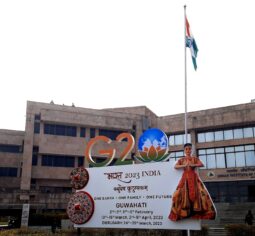
In the literature, the term has often been used in the context of recent Indian foreign policy (Verma, 2024). It describes India’s foreign-policy doctrine which began under Prime Minister Manmohan Singh (2004–2014) of the Congress Party, though it was then more commonly labelled “strategic autonomy” or “multi-alignment 2.0”, referring to a further deepening of relations with various major powers and multilateral institutions. This trajectory marks a shift away from Prime Minister Jawaharlal Nehru’s earlier philosophy of non-alignment, which implied thinner relationships with the great powers (Jaybhay, 2025).
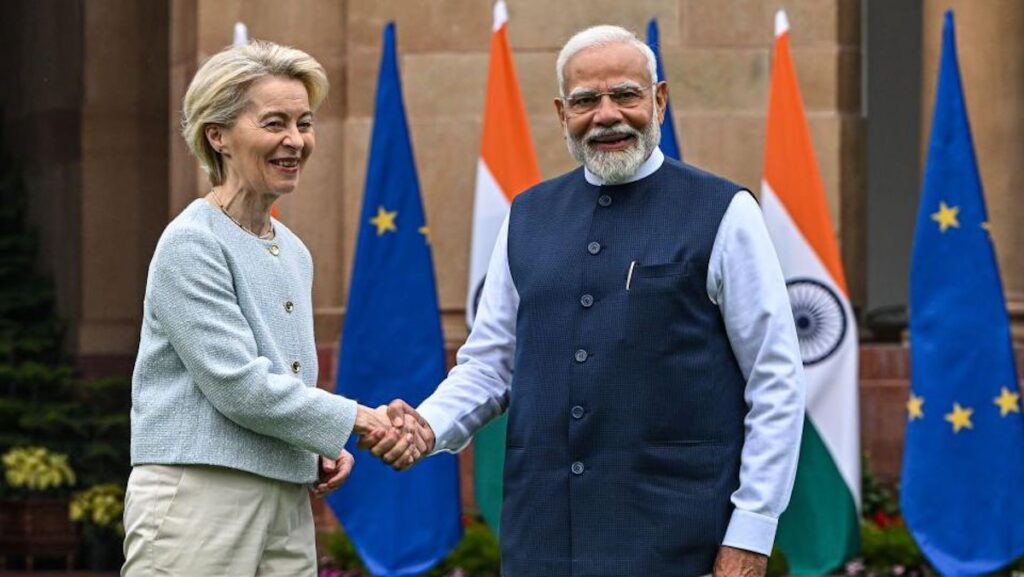
Multi-alignment has been expanded under Prime Minister Narendra Modi (Bharatiya Janata Party, BJP), who assumed office in 2014.
“In the view of India’s foreign policy establishment”, Jaybhay states, “[multi-alignment] is optimal and rational as it solidifies India’s strategic autonomy, maximises options for fluctuating tendencies, defers rigid entanglements, and promotes proactive and calibrated engagement with all the major powers” (Jaybhay, 2025).
In the words of Indian Foreign minister Jaishankar, “we are […] practicing the approach of engaging all major centers of power […] [S]uch multi-alignment reflects the reality of multipolarity. Obviously each engagement has its own particular weight and focus but whether it is the United States, Europe, Russia or Japan, we are trying to ensure that all ties, all these ties advance without seeking exclusivity. China falls in a somewhat different category because of the boundary dispute and the currently abnormal nature of our ties” (Jaishankar, 2023).
Despite the narrative surrounding multi-alignment, India’s relationships with other major powers have evolved unevenly in recent years. Military and economic cooperation with the United States, Japan, and Australia—countries with which India participates in the Quad—has increased, while its relationship with Russia has stagnated. At the same time, ties between India and China remain problematic and conflictual, despite India’s very large trade deficit with China (Jaybhay, 2025). Hence, the Indian case illustrates how multi-alignment is often accompanied by unevenness and asymmetries in the relationships between the middle power and the major powers.
Observers also use the term multi-alignment to describe Brazil’s (Stuenkel, 2025) and Indonesia’s recent foreign policy (Wicaksana & Yakti, 2025).
Multi-alignment strategies go mostly hand-in-hand with hedging, which means that the hedger insures against the risk that something goes wrong in the partnership with a particular great power.
In this sense, multi-alignment shows similarities with what Smith ‘calls dual alignment’: “[D]ual-alignment is a more ambitious form of hedging because, unlike non-alignment, the smaller power aims to concurrently align with both sides of the regional great power competition they are caught between. In other words, rather than being a more passive player – such as with non-alignment – dual-alignment entails a more active role by the smaller power in cultivating a ‘win on both sides’ middle ground between the competing larger powers” (Smith, 2020).
Bibliography
Topics
Theories
See More