

 Sign In
Synopsis
The concept of middle powers generally refers to states that are neither great powers nor small states: they are countries that are too large and influential to be considered small, yet lack the capabilities of great powers (Glazebrook 1947). The boundaries between great, middle, and small powers, however, have always been contested and remain unsettled. Importantly, most definitions of middle powers include additional characteristics beyond mere size and material capabilities.
Countries frequently described nowadays as middle powers include several members of the G20, such as Argentina, Australia, Brazil, Canada, India, Indonesia, Japan, Mexico, Saudi Arabia, South Africa, South Korea, and Turkey, among others (Cooper and Parlar Dal 2016). Many scholars and political analysts argue that the concept captures a distinct category of states with particular features, capabilities, and patterns of behavior, raising a range of interesting theoretical questions.
MATERIAL/POSITIONAL AND BEHAVIORAL DEFINITIONS
In the academic literature, different approaches to defining middle powers have been proposed (Stephen 2013). Many approaches begin with a material or positional definition, identifying middle powers based on their capabilities—such as military strength, economic indicators (notably GDP), and population size. Some scholars also consider regional influence or preponderance as an additional criterion.
Several scholars propose a behavioral definition, centered on the idea of ‘middlepowermanship.’ In this tradition, middle powers are associated with support for multilateral cooperation and international law. These countries tend to portray themselves as bridge-builders within the international system and often seek to mediate in international conflicts. In this vein, Cooper, Higgott, and Nossal define middle powers by “their tendency to pursue multilateral solutions to international problems, their tendency to embrace compromise positions in international disputes, and their tendency to embrace notions of ‘good international citizenship’ to guide their diplomacy” (Cooper, Higgott, and Nossal 1993).
Middle powers often engage in ‘niche diplomacy,’ focusing their significant but still limited diplomatic resources on specific initiatives that advance particular causes. Examples include Canada’s leadership in supporting the establishment of the International Criminal Court and the Convention on the Prohibition of the Use, Stockpiling, Production and Transfer of Anti-Personnel Mines and on Their Destruction—commonly known as the Ottawa Treaty (Cooper 1997, 18-19). Notably, the great powers did not join either of these initiatives.
A limitation of a purely behavioral definition is that, in principle, both great powers and small states can also act as “good international citizens.” For this reason, some scholars argue that a useful concept of middle powers should combine material and behavioral criteria. According to this view, only states that occupy an intermediate position in the global power hierarchy AND demonstrate practices associated with middlepowermanship should be classified as middle powers (Stephen 2013).
MIDDLE POWERS IN HISTORICAL PERSPECTIVE
Throughout the history of the modern international system, it has always been possible to distinguish powers that did not belong to the circle of great powers but nonetheless possessed capabilities that clearly set them above the small states. Examples include Italy and the United Kingdoms of Sweden and Norway around 1871, in contrast to Great Britain, Russia, France, Austria-Hungary, and the newly established German Empire.
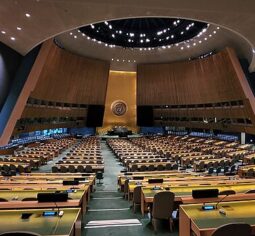
Academic interest in the concept of the middle power began in earnest after the Second World War. During the establishment of the United Nations and the discussions on the composition of the UN Security Council, middle powers such as Australia, Canada, and India asserted themselves in relation to the “great powers,” a category that roughly corresponded to the five permanent members—the United States, the USSR, the United Kingdom, France, and China—who later also became the officially recognized nuclear powers. At the time, relatively small but wealthy Western European countries such as Belgium and the Netherlands were also considered ‘middle-sized’ powers. These countries often cooperated diplomatically in order to counterbalance the great powers and demanded a prominent place at the important tables of international decision-making (Holbraad 1971; Glazebrook 1947).
During the Cold War, the room for manoeuvre of middle powers was limited. A country such as Canada, for example, positioned itself as a mediator and a strong supporter of the United Nations. In 1956, Canada played a key role in establishing the first UN peacekeeping mission in the Sinai desert following the Suez crisis. In general, however, middle powers were bound by the discipline of the superpower that protected them. The Non-Aligned Movement (founded in 1961), led by countries such as India, Egypt, Indonesia, Ghana, and Yugoslavia, attempted from the Global South to escape this dynamic. Yet due to losses of power caused by wars and internal coups, this group gradually lost momentum.
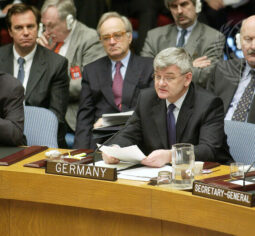
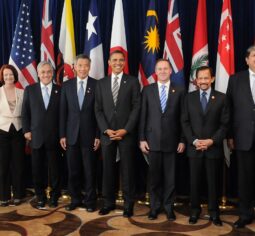
After the Cold War, the rigid discipline surrounding the great powers weakened. Middle powers gained greater freedom to pursue their own diplomatic initiatives—sometimes even in opposition to the great powers. Examples include cooperation between middle powers and small states in efforts to ban certain weapons systems, the establishment of the International Criminal Court, the UN principle of the Responsibility to Protect, and other initiatives. As a form of soft balancing, France and Germany opposed the American-British plans to attack Iraq in the UN Security Council in 2003. In 2009, Brazil and Turkey concluded an agreement with Iran regarding the Iranian nuclear program, despite the reluctance of the United States. Middle powers also secured a place in new informal but influential groups of major powers such as the G20 and BRICS.
Confusion about the definition of middle powers has persisted. For a long time, middle powers were partly defined on the basis of ‘good international citizenship,’ and the concept was therefore associated mainly with Western states. However, this view has become more contested. On the one hand, the benevolence of Western states is increasingly questioned in light of their role in international conflicts, the ecological crisis, double standards, and democratic backsliding, as illustrated by human rights violations against refugees.
At the same time, the rise of a large number of emerging middle powers such as Brazil, Indonesia, Turkey, and the United Arab Emirates has added further complexity. Scholars often distinguish between ‘traditional’ and ‘emerging’ middle powers. The former refers to wealthy middle powers of the Global North, such as Canada, Australia, and Japan. The latter includes countries such as Brazil, Mexico, and South Africa in the Global South. These states are often relatively young democracies, display high levels of domestic inequality, aspire to regional leadership, and pursue a reformist agenda regarding the global order (Jordaan 2003). However, given the diversity of interests and behaviors among these countries, this distinction has also become problematic (Jordaan 2017).
Many states in the Global South possess significant economic, diplomatic, and often military weight, allowing them to exercise substantial influence in their regions and beyond. They increasingly consolidate their strategic autonomy and engage in practices such as multi-alignment and hedging. Some perform poorly in terms of ‘good international citizenship’, however. If we look purely at material capabilities, countries such as Israel, Saudi Arabia, the United Arab Emirates, and Iran can also be considered middle powers, regardless of their problematic human rights records or their role in international conflicts. Some authors speak of ‘authoritarian middle powers’ (Desrosiers and Cheeseman 2026; Chaziza and Lutmar 2025). For others, however, the concept of middle powers becomes meaningless if the criterion of good international citizenship is abandoned. Within such a broad material category, we observe great diversity in behavior, which makes it useful to define subcategories. These debates remain the subject of intense academic discussion.
One promising avenue is the identification of so-called pivot or swing states: countries that can make a strategic difference and whose alignment may influence the balance of power between great powers (Sweijs et al. 2014; Fontaine and McKinley 2025).
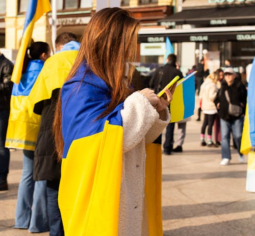
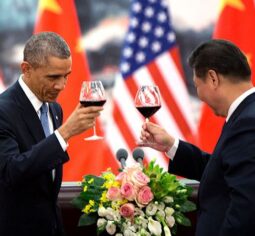
Recent developments in international politics have made middle powers even more relevant. Russia’s invasion of Ukraine, Western support for Israel’s mass atrocities in Gaza and the de facto annexation of occupied territories, and President Trump’s unilateral trade tariffs, illegal attacks against countries such as Venezuela and Iran, threats directed at Canada and Denmark (over Greenland), and his broader disengagement from multilateral cooperation and international organizations have forced many middle powers to reposition themselves. Many are increasingly concerned about unilateral great-power behavior and about the future of multilateralism and international law.
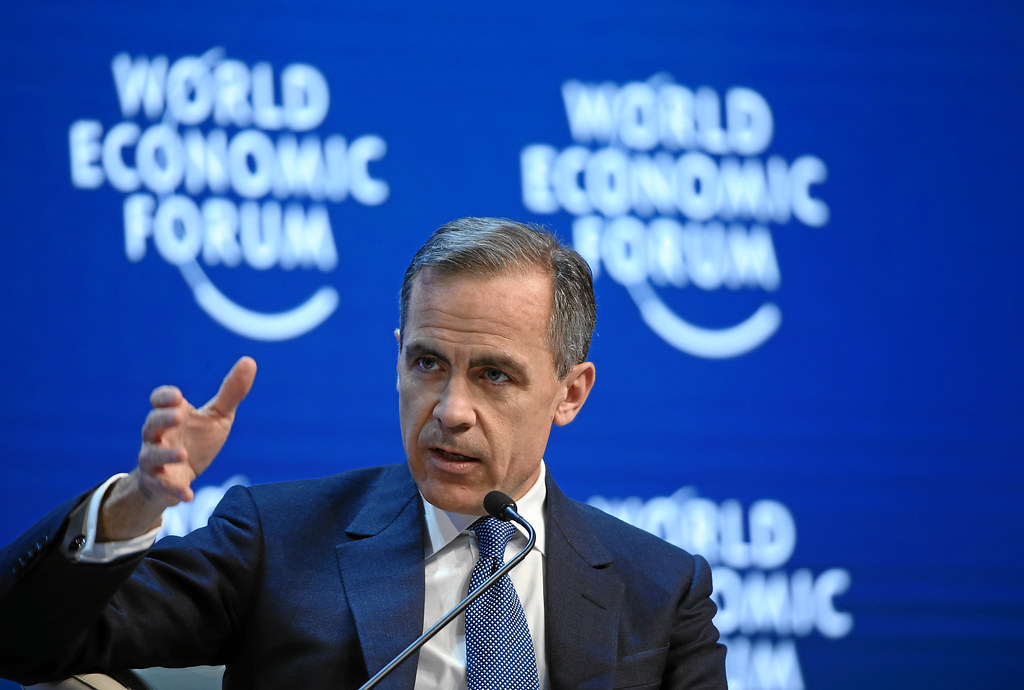
In his speech at the World Economic Forum in Davos, Canadian Prime Minister Mark Carney called for intensified cooperation among middle powers in addressing international challenges (Carney 2026). Middle powers and smaller states that can no longer rely on American military protection, or that hedge between great powers, are strengthening bilateral and minilateral cooperation in defense and security (see e.g. Ahn and Kim 2026). The key question is whether middle powers will continue to deepen and institutionalize their cooperation in the coming years in order to constrain the great powers. Such a development could produce a very different structure from the bipolar discipline that characterized the Cold War.
Bibliography
Topics
Theories
See More