

 Sign In
Synopsis
The US scholar Alexander Wendt offers a comprehensive theory of international politics based on constructivist assumptions. Somewhat similar to Kenneth Waltz’ structural realism, he conceives a parsimonious framework made up by states as the main actors that together form an international structure. But he fundamentally departs from Waltz by claiming that states, through there interactions, exchange beliefs and expectations about each other that determine the political quality of their relationships, so that eventually an international structure becomes an international culture. This culture, in its turn, informs and constrains the behavior of states, and even shapes the identities and interests of states. In contrast with structural realism, social constructivism does not consider states’ identities and interests as pre-given, but shaped through intersubjective learning and socialization.
The agent-structure problem and the structuration theory
Wendt’s understanding of structure is more sophisticated than Waltz’, which just amounts to a certain distribution of great powers with their respective capabilities. Wendt accepts the material reality of a distribution of states with economic and military capabilities. However, he goes beyond a merely materialist conception of international structure, as he views the latter as a social structure that is not only determined by material factors but also ideational factors such as “the beliefs and expectations that states have about each other” (Wendt, 2009, p. 20). Therefore, Wendt identifies an international structure with an international culture. The core of Wendt’s theory addresses the following questions: How does such a social international structure or culture emerge? And what are its effects?
To lay out his constructivist theory, Wendt confronts the perennial agent-structure problem in social science. Do actors, through their agency – i.e. their capability and free will to make decisions and undertake actions – shape the structure of the relations between actors? Or is it the structure that constrains actors in such a way that it informs what actors can and will do? The former conception corresponds with a voluntarist outlook of international politics. The latter, of which Waltz’ theory is an example, refers to a determinist view. Wendt solves this agent-structure problem based on the British sociologist Anthony Giddens’ structuration theory. According to this theory, agency and structure are equally important: agency – i.e. states with their autonomy to act – shapes the structure, while the structure substantially confines what actors can and will do, and even what they are.
How actors shape structures
A good starting point to apply the structuration theory to international politics is the allegory of a first encounter. Take the arrival of aliens with their spaceships on planet Earth. This sudden event poses a dilemma to Earth, because it does not know whether the aliens have good or bad intentions. One option is to be confident that the aliens are friendly, whereby Earth can give them a warm welcome. The other option is guided by worst-case-scenario thinking – as some realists would prescribe –, and even implies a first missile strike to prevent attack or worse by the aliens. Anyway, the first reaction by Earth amounts to an action that will elicit a reaction by the aliens, and then more actions and reactions, in other words, a process of “signalling, interpreting and responding” is set in motion. We can assume that the chances are real that a friendly action will be interpreted as such and answered by a friendly reaction, whereas a hostile action will probably spark a hostile reaction. These initial interactions might generate a sequence of action and reaction that ultimately generates a structure, or culture, of either friendship or enmity. That is why Wendt posits that “history matters”: cultures among actors are built on past experiences with each other.
This cumulation of action and reaction is all the way infused by ideas, namely perceptions and expectations about each other. This process is referred to as intersubjective learning, as likeminded or adversarial ‘subjects’ continuously exchange and convey ideas about how they look at each other and at the relationship. The initial action of Earth is based on a (correct or wrong) perception of the aliens, but the aliens’ reaction will seemingly ‘confirm’ Earth’s initial perception. If hostility is met with hostility, Earth will be even more convinced that the aliens are bad. But perhaps the root of the conflict was Earth’s first perception, which, in other words, worked as a self-fulfilling prophecy, as indicated by the Thomas theorem (1928), named after the sociologist William Thomas: “If men define situations as real, they are real in their consequences.” So, even inaccurate perceptions can make actors end up together in a hostile international culture. This appreciation of how perceptions, as ideas, not only inform actions and reactions, but eventually also the cultural dimension of an international structure, is a key contribution of Wendt’s social constructivism.
How structures shape actors’ behavior and character
Once established, the culture sets ‘the rules of the game’, i.e. what actors come to find normal, or internalize, in terms of mutual expectations and behavior. When actors internalize cultural values, they get socialized within a specific international culture (or structure). Within a culture, actors follow a logic of appropriateness and no longer a logic of consequences. States who got used to operate in an international structure marked by distrust, brutality and conflict, will play along, convinced that this behavior is morally the only right thing to do (since “all the others are also like that, and this is the only way to survive”). In other words, a culture determines which behavior is legitimate. This logic of appropriateness, which flows from socialization in a specific culture, goes beyond the logic of consequences, which perhaps prevailed at the earliest stages of the making of that brutal culture, when states grudgingly adapted, merely not to face the consequences. At the same time, one can imagine an international culture where friendship, solidarity and the rule of law prevail. Within a culture, most actors will no longer question these values. The few who do are likely to be punished or marginalized, as for defectors the logic of consequences still applies. With actors abiding by the rules, the culture keeps on producing self-fulfilling prophecies.
International cultures inform and constrain the behavior of states, but in the longer term also the actors’ identity or character – who they are. Actors’ identities are equally social constructs, as they are largely formed through the way actors are seen and treated by others; actors constitute each other. This observation is grasped by the metaphor of the looking-glass self, advanced in 1902 by Charles Horton Cooley, a representative of symbolic interactionism in sociology and social psychology. Perceptions and behavior of others towards you will shape your identity or character. In other words, by looking at how the others interact with you, you can see how you have become yourself, as if you look in a mirror. If a state is socialized in an environment marked by competition and brutality, chances are real that it will internalize those values at the level of its character, and behave likewise. Hence, the self-fulfilling prophecy can do its work again.
Many international cultures can exist
Based on cumulations of actions and reactions, driven by self-fulfilling prophecies, multiple international structures with a certain culture are thinkable at both regional and global level. As Wendt argued in his much cited 1992 article: “Anarchy is what states make of it” (Wendt, 1992). Absent a world government, these international structures definitely remain anarchical, but the specific culture of anarchy is of the states’ own making. With their limited agency, states often have a degree of choice to determine the social direction of international relations. Wendt illustrates his theory elaborating three cultures of anarchy: Hobbesian, Lockean, and Kantian. This set of cultures corresponds with the three traditions or perceived dynamics in world politics by English School theorists. The three cultures represent various degrees of international cooperation. In addition, Wendt distinguishes between three degrees of internalization by states, graduating up to the third degree of full internalization, which corresponds with full socialization within an international culture, as explained by constructivism.
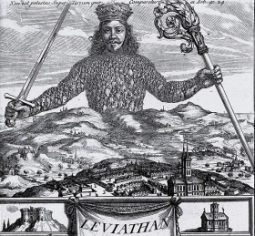
In a Hobbesian culture, there is always conflict, which can even lead to the elimination of one by another. In the Lockean culture – after John Locke –, there is rivalry between states, but at least there are some rules, such as respect for each other’s sovereignty – in other words, a logic of consequences. No state is eliminated, no foreign territory is annexed. In the Kantian culture, finally, friendship prevails. These friends, by definition, never fight wars.
The first degree of internalization in fact implies hardly any internalization but refers to coercion. States fight, respect sovereignty, or avoid war, merely because they have no other choice. In the Hobbesian culture, one can think of a people that must fend off a sudden foreign invasion as a first encounter. At the first degree in the Lockean culture, a state has no other choice than to respect again the sovereignty of a country it just invaded, because it is militarily forced to do so by an international coalition (think of Iraq that had to leave Kuwait in 1991 after a US-led, UN-mandated war). The scenario of Kantian ‘friendship’ – abstractly defined by the impossibility of war – under coercion might refer to the prospect of escalation into nuclear war and mutually assured destruction whenever two nuclear powers such as the US and Russia might clash.
The second degree of internalization involves some choice, but the degree of internalization sticks at the level of rational cost-benefit calculations. Within the Hobbesian culture, a state might think that the benefits of invading and annexing another country outweigh the costs. In the Lockean culture, states might consider limited war to settle an account, but refrain from definitively violating the other’s sovereignty through full or partial annexation, for the simple reason that they know that this will provoke a tough counterreaction from the international community. In the Kantian culture, states might consider it (e.g. war between the US and China), but the cost-benefit analysis points at no war, merely because the costs would be too high, given deep economic interdependence between the parties; in line with the definition of this culture, there will be no war.
Wendt’s social constructivism focuses on what happens in the third degree of internationalization, namely full socialization in the culture, where states embrace the rules of the game as legitimate and act according to a logic of appropriateness. As to the Hobbesian variant, think of the Cold War martial culture between the US and Soviet Union, in which competition, arms race, proxy wars in the Global South, and mutual hatred dominated political and social life. Playing this game was considered as the only appropriate policy. In a Lockean culture, states – e.g. the US vis-à-vis the Bahamas – never consider any annexation, because they deem such behavior inappropriate. Third degree internalization in the Kantian culture amounts to a security community (see Liberalism Part I) in which war has become unthinkable because the highly interdependent societies involved have internalized a common identity and friendship. Francis Fukuyama’s liberal ‘end of history’ equally envisions such a highly internalized world society (Fukuyama, 1992). Beyond these three abstractly defined cultures, we can imagine many more, and more sophisticated, variants for the real world. Several have already materialized.
Bibliography
Topics
Theories
About Course
Are you new to PHP or need a refresher? Then this course will help you get all the fundamentals of Procedural PHP, Object Oriented PHP, MYSQLi and ending the course by building a CMS system similar to WordPress, Joomla or Drupal. Knowing PHP has allowed me to make enough money to stay home and make courses like this one for students all over the world. Being a PHP developer can allow anyone to make really good money online and offline, developing dynamic applications. Knowing PHP will allow you to build web applications, websites or Content Management systems, like WordPress, Facebook, Twitter or even Google. There is no limit to what you can do with this knowledge. PHP is one of the most important web programming languages to learn, and knowing it, will give you SUPER POWERS in the web development world and job market place. Why? Because Millions of websites and applications (the majority) use PHP. You can find a job anywhere or even work on your own, online and in places like freelancer or Odesk. You can definitely make a substantial income once you learn it. I will not bore you 🙂 I take my courses very seriously but at the same time I try to make it fun since I know how difficult learning from an instructor with a monotone voice or boring attitude is. This course is fun, and when you need some energy to keep going, you will get it from me. My Approach Practice, practice and more practice. Every section inside this course has a practice lecture at the end, reinforcing everything with went over in the lectures. I also created a small application the you will be able to download to help you practice PHP. To top it off, we will build and awesome CMS like WordPress, Joomla or Drupal.
What to learn?
Become a UX designer. You will be able to start earning money from your XD Skills. You will be able to add UX designer to your CV Build a UX project from beginning to end. Become a UI designer. Build & test a full mobile app.Instructor