

 Sign In

Synopsis
Johnston defines strategic culture as ‘an integrated system of symbols (e.g., argumentation structures, languages, analogies, metaphors) which acts to establish pervasive and long lasting strategic preferences by formulating concepts of the role and efficacy of military force in interstate political affairs, and by clothing these conceptions with such an aura of factuality that the strategic preferences seem uniquely realistic and efficacious’ (Johnston 1995). These preferences are also addressed by Carnes who argues that ‘[s]trategic culture consists in the traditional practices and habits of thought by which military force is organized and employed by a society in the service of its political goals’ (Carnes 1985). Kavanagh uses the concept political culture, yet it is equivalent to strategic culture. He states that ‘we may regard the strategic culture as a shorthand expression to denote the emotional and attitudinal environment within which the defence community operates’ (Kavanagh 1972).
Gray states that ‘[…] strategic culture matters deeply because it raises core questions about the roots of, and influences upon, strategic behaviour’ (Gray 1999). By strategic behaviour, this author means behaviour relevant to the threat or use of force for political purposes. He goes on, ‘[strategic culture] comprises the persisting (but not eternal) socially transmitted ideas, attitudes, traditions and habits of mind and preferred methods of operation [so, behavioural patterns] that are more or less specific to a particular geographically based security community that has had a necessarily unique historical experience’ (Gray 1999).
Johnston unpacks why states’ actions have an added layer of complexity beyond more tangible aspects such as geography. He notes that: ‘[t]he neorealist paradigm assumes that states are functionally undifferentiated units that seek power to optimize their utility. [...] Strategic choices will be [...] constrained only, or largely, by variables such as geography, capability [and] threat. [...] Most proponents of the strategic culture approach, however, would fundamentally disagree. […] In their view, elites socialized in different strategic cultures will make different choices when placed in similar situations. Since cultures are attributes of and vary across states, similar strategic realities will be interpreted differently’ (Johnston 1995).
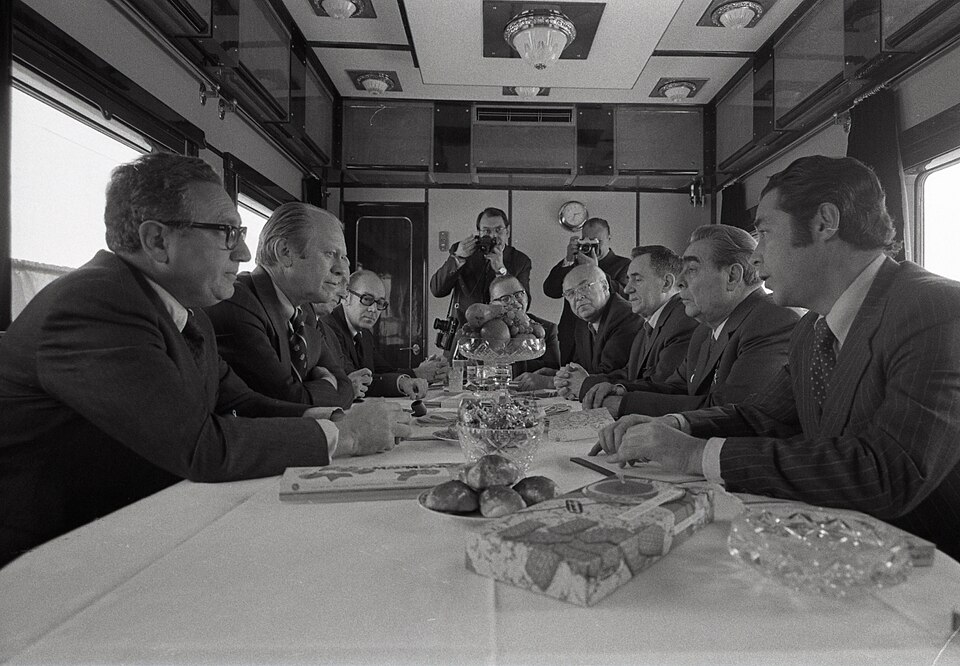
An example of this is provided by Jack Snyder in 1977: ‘It is enlightening to think of Soviet leaders not just as generic strategists who happen to be playing for the Red team, but as politicians and bureaucrats who have developed and been socialized into a strategic culture that is in many ways unique’ (Snyder 1977).
Bibliography
Theories
See More