

 Sign In
Synopsis
Andrew Munford provides one of the most used definitions of proxy wars or proxy intervention, which he uses interchangeably. He states that “[p]roxy wars are a complex and prevalent phenomenon in the field of international relations, characterised by the indirect confrontation between major powers or states through the support of surrogate actors in a third-party conflict. This strategy allows them to pursue their interests and objectives while minimising the risk of a full-scale war or a direct clash between major powers. […] In a proxy war, the main actors, typically major powers or their allies, support and sponsor proxy forces, which can be local or regional groups, rebel factions, or even whole governments. The support provided includes weapons, funding, training, and strategic guidance. The proxies are aligned with the interests of the sponsoring powers and carry out military, economic, or political actions on their behalf […] (Mumford 2013).
Rauta, a scholar very active on the analytical application of proxy wars to various conflicts defines it “[…] as a violent armed interaction resulting from polarisation of competing political goals between two organised parties, a Beneficiary and a Target, in which at least one party engages the other indirectly in sustained collective violence through a third party, the Proxy. First, the definition establishes a set of core features of the phenomenon: the third party, indirect intervention, and relations interaction. Second, it allows to analytically differentiate proxy wars as acts of violence in light of their chronic misrepresentation in conflict research. By emphasising violence, this definition reflects on proxy wars as warring events resulting from three overlapping dyads: the Beneficiary-Target dyad, the Beneficiary-Proxy dyad, and the Proxy-Target dyad. What constitutes a proxy war is the indirect projection of violence onto the Beneficiary-Target dyad via the Proxy-Target dyad through the Beneficiary-Proxy dyad” (Rauta 2018).
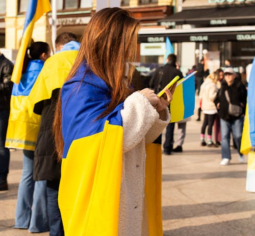
Mihaly further explores the concept, examining a current conflict – Ukraine and Russia –, and states that “a proxy war is the relationship between the supporter and the supported, contracted one-sidedly by the supporter, partly or wholly clandestine, an indirect military intervention into a developing or ongoing conflict by supporting one politically interested party of the conflict with money, weapons, training, and advice in order to reach the short-term goal of influence over the conflict and the overlapping long-range goals of the supported and the supported.” He illustrates this in relation to conflict. “It was initiated using hybrid warfare on the side of the Russians, and Western states (especially the US) helped Ukraine as a proxy state with advisors and instructors. So, from the beginning it was a conflict of those methods, the methods of hybrid warfare and proxy warfare. The conflict has become a direct war since 2022, but it is still showing hybrid elements, such as information warfare including hacker activity, disinformation campaigns and propaganda, on both sides” (Boda 2023).
However, Hughes, using, Rondeaux and Sterman’s definition of proxy warfare, argues that the Ukranian war is not a proxy war. For them, “Proxy warfare today is best defined as sponsorship of conventional or irregular forces that lie outside the constitutional order of states” (Rondeaux and Sterman (2019). Hughes, states that it is not a proxy war because of that reason: “The first is that there are frictions between Ukraine and its allies over Ukraine’s requests for arms which may give it an offensive capability against Russia. The second is that Western backing would be of little use if the Ukrainians were not ready to fight. The willingness of Ukraine’s armed forces and civilian population to resist Russia is an indigenous response, and it patronises them to imply otherwise. Zelenskyy’s reported statement during the first hours of the invasion that ‘I need ammunition, not a ride’ was also unprompted by any external ally, which would in all likelihood have been prepared to host an exile government if needed. Western arms may have helped Ukraine to fight back, but were no substitute for the willpower of a nation at arms” (Hughes 2022).
Bibliography
Topics

See More