

 Sign In

Synopsis
Compartmentalization usually refers to the practice by which states, in their relations with other states, draw clear boundaries between different policy issues. The goal is to ensure that significant disagreements in one area do not damage constructive cooperation in others. As a result, it is possible for two countries to support opposing sides in a conflict while simultaneously continuing economic or energy cooperation.
Compartmentalization is more common in a world of deepened complex interdependence and globalization, where states cannot easily afford to end their cooperation with important partners. In areas such as energy trade, for instance, one state may depend on a reliable energy supply, while the other relies on the revenues generated by that trade.
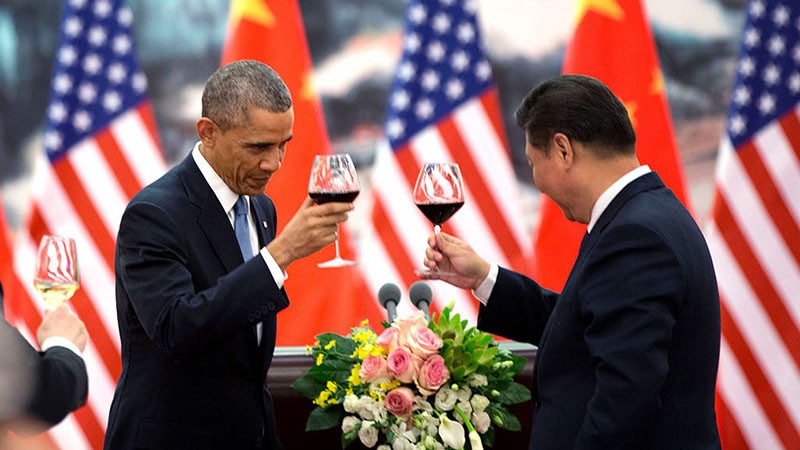
A concrete example of compartmentalization is the way the Obama and Biden administrations cooperated with China on climate, whereas they became fierce trade and security competitors.
Kardaş and Sinkaya are among the first to offer a comprehensive analytical framework to understand compartmentalization. In a globalizing world, they contend, “a particularist and compartmentalized approach to foreign relations is […] gaining ground, whereby states work with other counterparts in various issue-areas or loci in order to realize mutual gains and mitigate shared concerns” (Kardaş & Sinkaya, 2025). Their paper includes a useful literature review on the topic.
Kardaş and Sinkaya distinguish between actor-based and issue-based compartmentalization. In the actor-based variant, states develop relationships with other states which might be at odds with each other. In the more common usage of the term, states deliberately separate policy issues on which they diverge on the one hand, and converge and cooperate on the other, with one and the same state.
Compartmentalization is the opposite of issue linkage: “While linkage politics refers to actors’ ability to manipulate the connection and interdependence across issues, the logic of compartmentalization hinges on the ability to isolate or decouple issues from each other so that conducting them on separate platforms becomes possible.” Issue linkage can foster cooperation, generate positive spill-overs from one issue area to the other, and improve the overall relationship between two states. In contrast, compartmentalization is applied to avoid that conflict in one sensitive issue area negatively spills over to other issue areas where cooperation is still wanted.
Bibliography
Topics
Theories
See More