

 Sign In
Synopsis
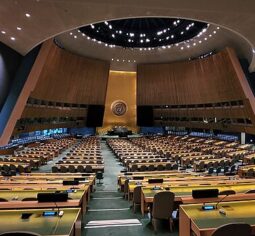
Do intergovernmental organizations (IO) such as the United Nations (UN), International Monetary Fund (IMF) or Group of 20 (G20) have power? There is no easy answer to this question.
Barnett and Duvall define power as “the production, in and through social relations, of effects that shape the capacities of actors to determine their circumstances and fate” (Barnett & Duvall, 2005). When we say an IO has power, that means that the IO as such possesses agency to let other actors do what they otherwise would not have done, or to shape the circumstances in which other actors can thrive. Put differently: the IO can make a real political difference on the ground (for a discussion see Barnett & Finnemore, 2005).
To dissect the way an IO exerts power, we first need to take a sharper look at the nature of an IO’s actorness. Many IOs possess both an intergovernmental decision-making body composed of representatives of the member states, and a secretariat, which prepares and implements decisions.
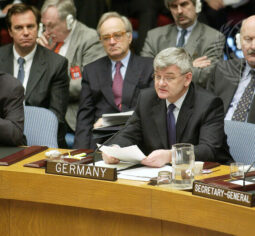
In cases where the intergovernmental decision-making body entirely shapes the decisions, it is hard to state that ‘the IO’ has real power. In those cases, the outcomes of the IO are often the mere reflection of the consensus or compromise among the member states. Think of resolutions of the UN Security Council on questions of war and peace. There the member states’ capitals call the shots, with almost no impact from the UN Secretary-General (who heads the secretariat). In those cases, the member states exert power over other actors through the IO as a mere organizational device. This situation corresponds with the sceptical vision of realists on the power of IOs (Grieco, 1988; Mearsheimer, 1994).
Yet, in certain cases the national delegates in intergovernmental bodies have acquired a degree of autonomy from the members states’ governments. Several policy areas are quite technical, or do not touch upon existential questions of national security, so that governments grant their delegates some autonomy to make proposals and even make decisions. Moreover, national delegates can constitute a community in their own right, which as such also possesses actorness, which then overlaps with the actorness of the IO. Given this autonomous capability to make decisions, we can say that the IO has power in those cases.
In many other cases, we observe power exertion by the IO’s secretariat. This often occurs at the discursive level. The secretariat has some power to define problems and to set the policy agenda. Hence, the secretariat co-determines the intellectual parameters within which the intergovernmental decision-makers will operate. In the IMF, for example, the Managing Director and her more than 3,100 staff produce a mass of precious data that greatly inform the decisions of the Executive Directors. Furthermore, heads and senior staff of IOs have the ability to speak out publicly about certain situations based on their expertise or moral authority, hence discursively empowering or disempowering certain actors.
This exertion of power by the secretariats is based on particular resources. One category are the institutional competencies of the secretariat. A special case are international courts, such as the International Court of Justice and the International Criminal Court. There the IO’s key officials – the judges – possess a large autonomy vis-à-vis the courts’ member states. Another great resource is the secretariat’s knowledge in the form of studies, statistics, (confidential) information provided by member states, rankings, etc.
Bibliography
Topics
Theories
What to learn?
Work comfortably with Microsoft Excel Format spreadsheets in a professional way Be much faster carrying out regular tasks Create professional charts in Microsoft Excel Work with large amounts of data without difficulty Understand Accounting and Bookkeeping principlesInstructor

See More