

 Sign In
Synopsis
The term organised hypocrisy was developed by Stephen Krasner in relation to Westphalian sovereignty, and it has been applied, in particular, to international interventions (Lipson 2007), and recently to challenges linked to climate change’s governance—although for the latter Stevenson calls this sort of hypocrisy ‘bullshit,’ borrowing from Frankfurt (2005) (Stevenson 2020). For Krasner, “The Westphalian model is an example of organized hypocrisy. It is a well-understood cognitive script, one that is sometimes honored and sometimes not. Rulers in more powerful states have justified violations of Westphalian principles by invoking alternative norms such as the illegitimacy of revolutionary regimes (the Holy Alliance), the provision of national security (the Platt amendment imposed on Cuba by the United States), problems of drug running (the 1989 U.S. invasion of Panama), or the protection of the Soviet commonwealth (the Brezhnev doctrine)” (1999).
Stevenson refers to hypocrisy as “[…] an act performed by someone who does not really believe what they are saying, thereby manifesting as an inconsistency between stated principles and actual behaviour. The stated principles can be understood as bullshit in the absence of a genuine attempt to align practice with them; the principles are then shown to be ‘hot air’ designed to affect an audience in the actor’s favour. This may occur at the individual level, but also at the institutional level” (Stevenson 2020). While Thompson develops that “[i]nstitutional hypocrisy involves a disparity between the publicly avowed purposes of an institution and its actual performance or function. This form of bullshit is pervasive and harmful in politics. In international relations, this has been studied mostly in the context of states” (Thompson 1995).
Dovi addresses this subject and calls it political hypocrisy. She states that, “Political hypocrisy consists in political actors' exaggeration of their state's commitment to morality. So I locate political hypocrisy at the disparity between the statements of public officials and the actions they take on behalf of their state. To identify a state's action as hypocritical, it is necessary to examine the justifications public officials offer for an action, the means used to adopt that action, and the intended effects of the action. My present concern is with a particularly clear case of political hypocrisy – that is, when political actors exaggerate the moral character of their state's actions and act in ways that circumvent or undermine the values appealed to in their justifications for these actions. In particular, I am troubled by the effects such hypocritical actions can have on legal norms in the international arena. I will argue that it is sometimes crucial to hold political elites to the moral standards they appeal to in their public statements” (Dovi 2001).
Acharya provides an analysis of hypocrisy in relation to the reaction to the 9/11 attacks in 2001. “To elaborate, the war on terror is justified as protecting ‘national security’ from a transnational menace which challenges it by its very mode of organisation and operation and its presumed political agenda, including an alleged aspiration to restore the pre-Westphalian caliphate. But in so doing, the leading state waging this war and its supporters also exempt themselves from the norms of the Westphalian order, and approve instruments that could be profoundly subversive of the order” (Acharya 2007).
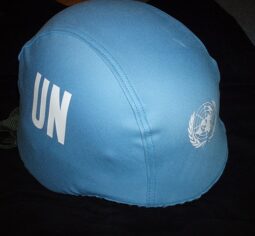
In his study on peacekeeping, Lipson explicitly associates hypocrisy with organizations: “Organized hypocrisy refers to inconsistent rhetoric and action – hypocrisy – resulting from conflicting material and normative pressures. Actors respond to norms with symbolic action, while simultaneously violating the norms through instrumental behaviour. For example, when competitive pressure impel firms to exploit workers or pollute the environment, companies often develop public relations campaigns extolling their commitment to worker’s rights and environmental conservation. It is ‘organized’ hypocrisy in the sense that it is a product of formal organizations, and results from systematic contradictions in organizational environments” (Lipson 2007).
Bibliography
Theories
See More