

 Sign In
Synopsis
The concept ‘great power management’ stems from the English School of international relations. It was elaborated in Hedley Bull’s book The Anarchical Society. A Study of Order in World Politics (Bull, 1977). For Bull, an ‘international society’ – a group of states that adhere to a minimal set of common interests and values – is the best the world can hope for in the foreseeable future. It stands between an anarchical and brutal international states system with no rules at all, and a more utopian world society bound together by cosmopolitan values.
An international society depends on international order. The latter notion implies activity aimed at the preservation of the international society, the independence and sovereignty of states and peace (even though in some cases war that is bound to certain limits and rules is necessary to maintain international order). Order also means that states keep their promises and respect international treaties (pacta sunt servanda).
Within the – still anarchical – international society, great power management is one of five primary institutions – alongside the balance of power, international law, diplomacy, and (regulated) war – that support international order. Great power management refers to the special responsibilities of the great powers for the maintenance of international order and hence international society.
For Bull, great powers are those few countries which possess military capabilities that are superior to all other countries. In addition, they are recognized by other states, and by their own leaders and populations, as having special rights and duties. Logically, great powers have had a permanent seat in the Council of the League of Nations and the UN Security Council.
The mere fact that a few powers are more powerful than all the others, according to Bull, already contributes to international order. The existence of the great powers simplifies international relations. If they assume their special responsibilities, great powers contribute to international order by 1) managing the relations among themselves, and 2) by employing their power vis-à-vis some other countries for the sake of international order and international society. Bull immediately acknowledges that great powers not always behave this way, but at least it is what they should do to preserve order.
Among themselves, the great powers preserve the balance of power; seek to avoid or control crises among them; and seek to limit and contain great power wars. In relation with the rest of world, the great powers unilaterally exploit their local preponderance; are entitled to a sphere of influence (that they mutually respect); and undertake joint action when the international order is threatened by smaller states or actors. The latter point relates to great powers forming a ‘concert’ or ‘condominium’ in which they consult and cooperate to sustain the international society. In this sense, the small club of great powers steers international relations, or, as Bull puts it, provides “central direction or management.”
In today’s world, such concert is being missed, as tensions between the US on the one hand, and Russia and China have on the other have been mounting in recent years. Imagine what a great power concert could have meant to quell the Syrian civil war or to stabilize Afghanistan. In fact, the active involvement of the US and Russia on opposite sides in the wars in Syria and Ukraine show the catastrophic failure of great power management.
Bull’s notion of the international society, which implies great power management, both represents an ontological claim – in the sense that since a few centuries the international system seems to display the tenets of an international society – as well as – a less outspoken – normative prescription. Bull is well aware that the perceived necessity of great power management can conflict with other values, such as respect for the independence and sovereignty of smaller states, peace, or international law. This is the case when great powers take action to preserve the balance of power – which in some cases led to the absorption of smaller states – or establish, and respect each other’s spheres of influence, where each great power exerts its local preponderance in a hierarchical relationship with smaller states. To avoid (nuclear) great power war, and hence to maintain international order, elements of justice sometimes need to be sacrificed.
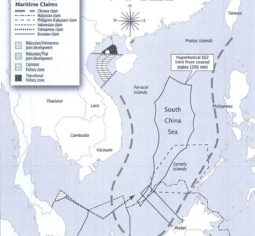
It goes without saying that such proposition is highly contestable from a moral point of view. It would be definitely unjust, if the US were entitled to treat Latin America as its sphere of influence; if Russia were allowed to retake actual control over the republics of the former Soviet Union (let alone by force and the kind of mass atrocities that it has committed in Ukraine); or if China were permitted to claim and militarize the whole South China Sea, in breach of the Law of the Sea and the sovereign rights of opposite countries such as Philippines and Vietnam.
Bibliography
Topics
See More