

 Sign In
Synopsis
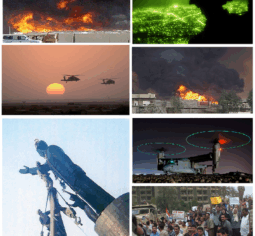
The term polycrisis was coined by complexity theorists Morin and Kern (1999), referring to the “complex intersolidarity of problems, antagonisms, crises, uncontrollable processes, and the general crisis of the planet” (cited in Lawrence et al., 2024). It later evolved into a buzz word in politics and media to denote the simultaneous occurrence and entanglement of multiple global crises – such as climate change, the Covid-19 pandemic and today’s various wars.
Lawrence et al. have embarked on a more academic understanding of the phenomenon. They embed their definition of polycrisis in systems thinking. Global ‘systems’ include social order and governance, international security, the world economy, health, food, energy, the global eco-system and transportation and communication.
They define “a global polycrisis as the causal entanglement of crises in multiple global systems in ways that significantly degrade humanity’s prospects.” For them, a crisis is “a sudden (non-linear) event or series of events that significantly harms, in a relatively short period of time, the wellbeing of a large number of people.” A crisis occurs when a trigger event (such as the collapse of Leman Brothers in 2008) interacts with systemic stresses (these are slow-moving processes that undermine a system’s stability, such as risky practices in the US financial market) in a way that plunges the system into a harmful disequilibrium. A polycrisis can occur at whatever level (local, national, global), but here we focus on global polycrisis.
A crisis can have both an intra-systemic impact (for example destabilising the world economy by spreading across parts of this system) or inter-systemic impact (by ramifying from one system to others). In a polycrisis, distinct crises spill-over across systems, exacerbating and reshaping each other.
According to Lawrence et al. we currently experience an unprecedented polycrisis, more destabilising than the one around the 1970s oil shock and economic crisis, and the 2008 Global Financial Crisis. It is closely related to the trend of neoliberal globalisation of the past 30 years which contributed greatly to the homogenisation and interconnecting of the respective global systems.
As Tooze concludes: “A polycrisis is not just a situation where you face multiple crises. It is a situation […] where the whole is even more dangerous than the sum of the parts” (Tooze, 2022). It goes without saying that polycrisis requires robust and integrated forms of global governance. More background on polycrisis can be found on the webside https://polycrisis.org/ of the Cascade Institute.
Bibliography
Topics
Theories
See More