

 Sign In
Synopsis
Neo-royalism represents a major break from both the Westphalian and Liberal International orders: rather than being state-centred and rules-based, it is clique-centred and hierarchy-oriented, sustained by tribute and rent extraction rather than institutional rules.
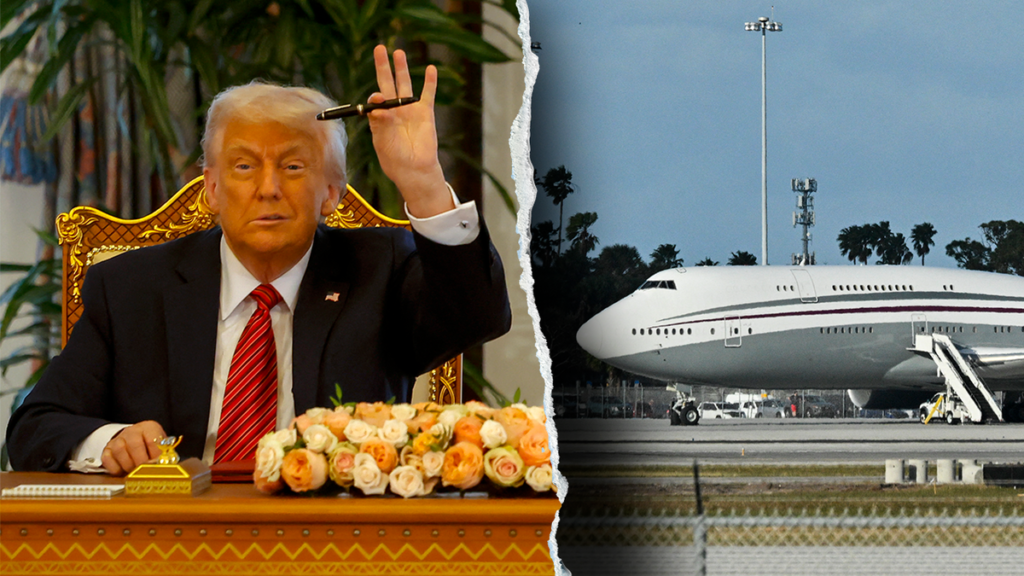
For Goddard and Newman, Neo-royalism ‘[…] centers on ruling cliques, networks of political, capital, and military elites devoted to individual sovereigns, seeking to generate durable material and status hierarchies based on the extraction of financial and cultural tributes’ (Goddard & Newman 2025). They differentiate this from the Westphalian system, arguing that the latter ‘[rests] on recognition of external sovereignty, [yet] the United States has repeatedly questioned the authority of even its closest allies to govern their own territories. Instead of mobilizing resources to maximize state power, US trade negotiations have been used to extract resources for the president and those closest to him. And while the Westphalian order rests on legal legitimation, the president insists that ‘He who saves his Country does not violate any Law’ (Goddar & Newman 2025). Thus neo-royalism differs from the Westphalian system and liberal order in four areas: primary actors, purpose, means of sustaining the order, and legitimation.
For Goddard and Newman, ‘Westphalian states rely on mobilization, using vast military, fiscal, and social bureaucracies to produce power. The LIO [Liberal International Order] added institutions that could regulate state interactions, directing them away from unproductive competition and toward greater security and prosperity. Neo-royalism maintains the LIO’s cross-boundary collaboration, because it allows them to maintain their power through the extraction of rents or tribute and the provision of bribes. This is not liberal cooperation, but instead is much closer to the type of collaboration practiced in oligarchic or mafioso systems and protection rackets. Leading cliques engage with local cliques in a process of distribution, in which they leverage threats, promises of access to the inner circle, or status recognition to maintain their hierarchical positions’ (Goddard and Newman 2025).
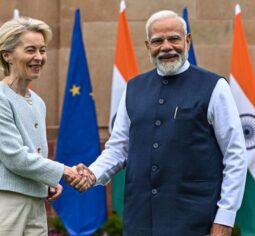
Goddard and Newman conjecture that, ‘[N]eo-royalist orders neither begin nor end with Trump. The ‘ideal typical’ order we outline can be found across time and space and has long competed and co-existed with state-based systems. Over the last decade, numerous leaders—including Turkey’s Recep Erdoğan, India’s Narendra Modi, Hungary’s Viktor Orbán, Saudi Arabia’s Mohammed bin Salman, China’s Xi Jinping, and Russia’s Vladimir Putin— have embraced elements of a neo-royalist order. But Trump’s position at the top of unparallelled power resources including the dollar-based global financial system and US military power, allows him to act as a “world orderer.” According to Zarakol, ‘[he has] a particular vision of the whole world [and wants] to order it in a particular way and, in doing so, create, modify, and reproduce political, economic, and social institutions in the world’ (2022, cited in Goddard & Newman 2025: S13).
Bibliography
Topics
See More