

 Sign In
Levels of Analysis
Levels of analysis in international politics are those spheres in social reality – from the individual over the state to the international system – where causes for international political phenomena are located. As such, they belong to the reality of world politics, they are ontological phenomena. In second order, they can also be applied as epistemological devices, as ways to break down for analytical purposes a complex reality into (interrelated) parts.
In international politics, several levels of analysis can be distinguished.
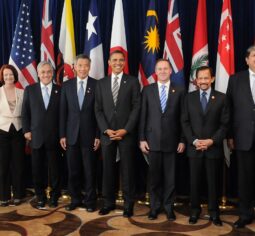
When we take the international system as the level of analysis, we assume that the structure of the system itself - e.g. an anarchy led by a number of great powers whose economic and military capabilities grow at different rates - harbors the causes for certain phenonoma, such as great power competition and war. This view is typical of structural or neorealism.
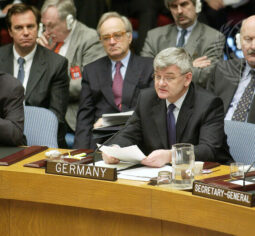
In addition, the state can be regarded as a locus of causes. States can possess certain relatively stable characteristics such as regime type, institutions, strategic culture or long-standing consensuses on key national interests, which explain state behavior. In some liberal traditions, for example, democracies are considered inherently more peaceful, whereas in Soviet doctrine capitalist states used to held as inherently expansionist and aggressive. Within the state, more variable factors such as shifting power relations between political parties after elections, or changes in public opinion, also matter to explain the state's foreign policy.
The democratic peace theory, which claims that democracies almost never go to war with each other, refers in fact to an additional level of analysis: pairs, or 'dyads', of states, combined with the state level, defined in terms of regime type.
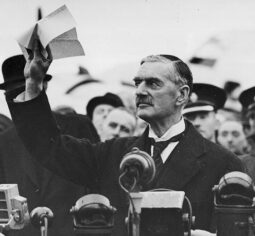
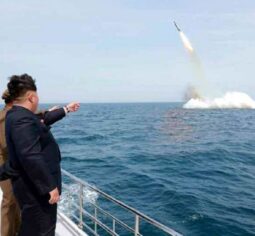
In foreign policy, and thus in international politics, individuals also matter, especially when individual leaders have the power to make a difference, for example in dictatorships or in democratic presidential regimes based on the constitution. Then it becomes worthwhile to study the biography, values and psychology of those leaders, as they are loci of causes in international politics.
At a completely different level of analysis, scholars have also reflected on the nature of humankind. Are (many) human beings intrinsically bad, distrustful, competitive and power-greedy, and does this explain why the world has been suffering from bloody wars for thousands of years, until this day? Or are (most) human beings intrinsically good, able to learn and apply reason for good causes, so that one day war will disappear? In contrast, feminist scholars have studied the fundamental question whether gender differences within the population and foreign policy elites matter for attitudes on international politics and foreign decision-making, notably on questions of war and peace.
Bibliography
Topics
Theories


See More