

 Sign In
Synopsis
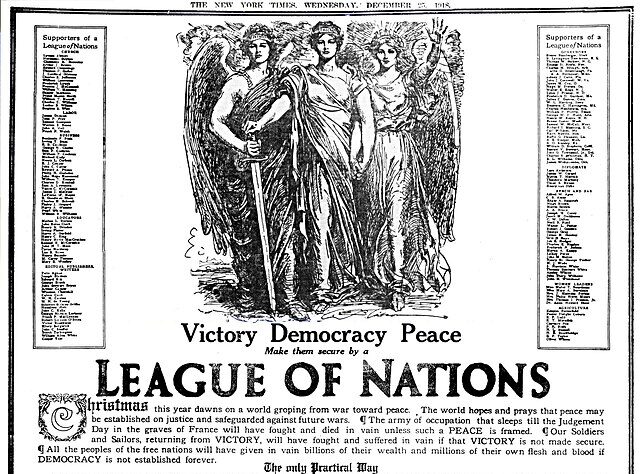
Liberal international relations (IR) theory is distinct from both liberal philosophy and liberal political ideology, though they share common roots and assumptions. Unlike realism, liberal IR theory presents a more optimistic view of human nature. It rejects the notion that most people are inherently bad or that the international system is inherently dangerous. Instead, liberalism emphasises human reason, the ability to learn from past mistakes—such as the World Wars and the Holocaust—and the capacity for moral progress. This perspective fosters optimism about the prospects for lasting peace, international cooperation, and the advancement of human rights and democracy.
One of the implications of this optimism is that liberal values can play a significant role in foreign policy, beyond material security and economic interests.
The German Enlightenment philosopher Immanuel Kant (1724-1804) already summarised quite a lot of the liberal theoretical project in his Zum ewigen Frieden (Perpetual Peace) (1795) and other works. He identified key societal factors that foster peace between states. He believed that if states adopted a republican (democratic) state form, they would be more prone to peaceful relations with others than the autocratic monarchies. This way, he introduced what later would become known as the democratic peace theory, which concludes that democratic states almost never wage war among themselves.
Furthermore, Kant contented that free trade between states would strengthen the case for peace, since war is bad for business. In the same vein, English liberal philosophers and economists such as Adam Smith (1723-1790) and David Ricardo (1772-1823), as well as the free trade activist and politician Richard Cobden (1804-1865), not only claimed – based on their classical economic theory – that free trade is the way forward to welfare maximisation for all nations, but also that cross-border commercial connections turn business elites into lobbies for peace.
Finally, Kant held that war would also be impeded through deep cooperation between states, preferably in the form of a federation of republics or ‘pacific union’ (Doyle, 2005). Nowadays, we can examine how international organisations foster peace.
In today’s public debate, the Kantian liberal tradition is often summarised under the label liberal internationalism. This is essentially an ideological project that promotes democracy, an open world economy and multilateral cooperation, with the underlying ontological claim that these factors will foster sustained peace and prosperity.
Certain modern strands of liberal IR theory highlight the effects of societal modernisation. Over the past centuries, and especially in the 20th century, societies have become increasingly specialised, technological, complex, and interdependent (Keohane & Nye, 2001). Business leaders and politicians have recognized that economic growth and prosperity can be achieved more effectively through trade and cooperation rather than war and territorial conquest. This idea was central to Norman Angell’s The Great Illusion (1909), in which he argued that war had become obsolete—though, tragically, this did not prevent the outbreak of World War I in 1914. Nonetheless, in a world of complex interdependence, states increasingly redefine their interests and discover shared goals, creating greater opportunities for peaceful international relations and long-term cooperation. From here, the strand of neoliberal institutionalism argues that international institutions and organisations make a difference in world politics, despite realist scepticism.
Liberalism, far more than realism, acknowledges the significant role of non-state actors in international politics. Pluralist approaches examine national societies and the influence of actors such as government elites, corporations, civil society organisations, the media, and public opinion. Many liberal scholars also argue that transnational connections—between societies and civil society organisations—play a meaningful role in shaping global politics.
Bibliography
Topics
Theories
About Course
Are you new to PHP or need a refresher? Then this course will help you get all the fundamentals of Procedural PHP, Object Oriented PHP, MYSQLi and ending the course by building a CMS system similar to WordPress, Joomla or Drupal. Knowing PHP has allowed me to make enough money to stay home and make courses like this one for students all over the world. Being a PHP developer can allow anyone to make really good money online and offline, developing dynamic applications. Knowing PHP will allow you to build web applications, websites or Content Management systems, like WordPress, Facebook, Twitter or even Google. There is no limit to what you can do with this knowledge. PHP is one of the most important web programming languages to learn, and knowing it, will give you SUPER POWERS in the web development world and job market place. Why? Because Millions of websites and applications (the majority) use PHP. You can find a job anywhere or even work on your own, online and in places like freelancer or Odesk. You can definitely make a substantial income once you learn it. I will not bore you 🙂 I take my courses very seriously but at the same time I try to make it fun since I know how difficult learning from an instructor with a monotone voice or boring attitude is. This course is fun, and when you need some energy to keep going, you will get it from me. My Approach Practice, practice and more practice. Every section inside this course has a practice lecture at the end, reinforcing everything with went over in the lectures. I also created a small application the you will be able to download to help you practice PHP. To top it off, we will build and awesome CMS like WordPress, Joomla or Drupal.
…
What to learn?
Design icons, business cards, illustrations, and characters Clean up face imperfections, improve and repair photos Use creative effects to design stunning text styles Remove people or objects from photos Cut away a person from their background Master selections, layers, and working with the layers panelInstructor